
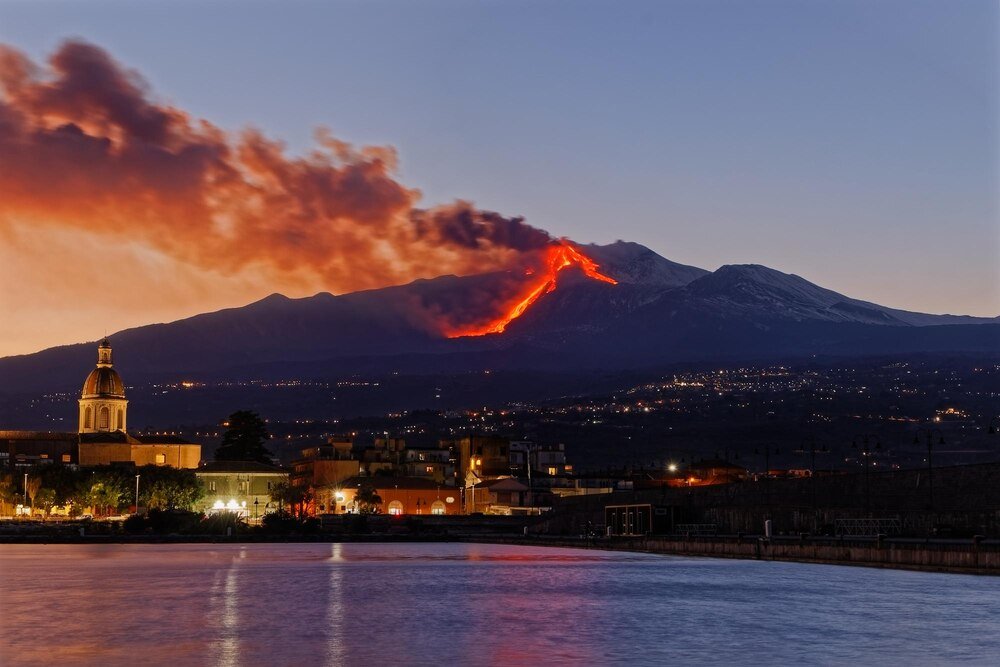
Understanding why Mount Etna is also called Mongibello can be confusing at first, especially when maps, locals, and guidebooks don’t agree on the name. The good news is that the story behind these two names is actually quite simple once it’s broken down. This guide explains where both names come from, how people use them today, and what they reveal about Sicilian history, culture, and the volcano itself. By the end, “Mongibello – Etna” will sound less like a mystery and more like a very Sicilian way of naming a mountain.
Where the Two Names Come From
Mount Etna’s double identity starts with language and layers of history. The “official” name used on maps, in scientific papers, and in most international contexts is Etna. This traces back to the ancient Greek Aítnē, used by Greek colonists in Sicily, and then adopted by the Romans as Aetna. For the classical world, Etna was already a gigantic, active volcano and a mythical place tied to gods and monsters.
Mongibello belongs to a different world: that of medieval Sicily, with Arabic and later Norman influences, and the living spoken dialects. The word is almost a linguistic joke. It combines the Arabic jabal (mountain) and the Latin/Italian mons (mountain): “mountain-mountain”. Over time this became Mongebel, then Mongibello in Sicilian and Italian usage.
Mongibello literally means “the mountain” twice over – a reminder that for locals, this wasn’t just a mountain, it was the mountain above all others.
So while Etna is the ancient, classic name, Mongibello reflects centuries of everyday life under the volcano, with people naming it using the languages they spoke on its slopes.
Mongibello vs Etna: How the Names Are Used Today
Both names are still alive, but they do not function in exactly the same way. In most formal or international contexts, “Etna” wins hands down. Tourist brochures, UNESCO documents, airline magazines, school textbooks — they almost always stick with Mount Etna. That’s the name people abroad recognize and search for online.
Mongibello, by contrast, has a more local, familiar flavor. It appears in Sicilian dialect, stories, poetry, and in the everyday language of people who live in the villages around the volcano. In some cases, Mongibello is used to refer specifically to the summit area and active craters, while “Etna” can mean the whole mountain massif, but this distinction is not rigid everywhere.
Typical usage looks something like this:
- Etna – the official and international name; used on road signs, maps, academic work, park management.
- Mongibello – local, affectionate, traditional; common in Sicilian, in legends, and in descriptions of its fiery activity.
Both names can appear side by side in cultural contexts, for example in book titles, local businesses, or events that want to emphasize a strong Sicilian identity. “Etna” says “geography”; “Mongibello” says “home”.Together, they give the volcano a double personality: global landmark and deeply local presence.
Myth, Legends, and the Imaginary of Mongibello
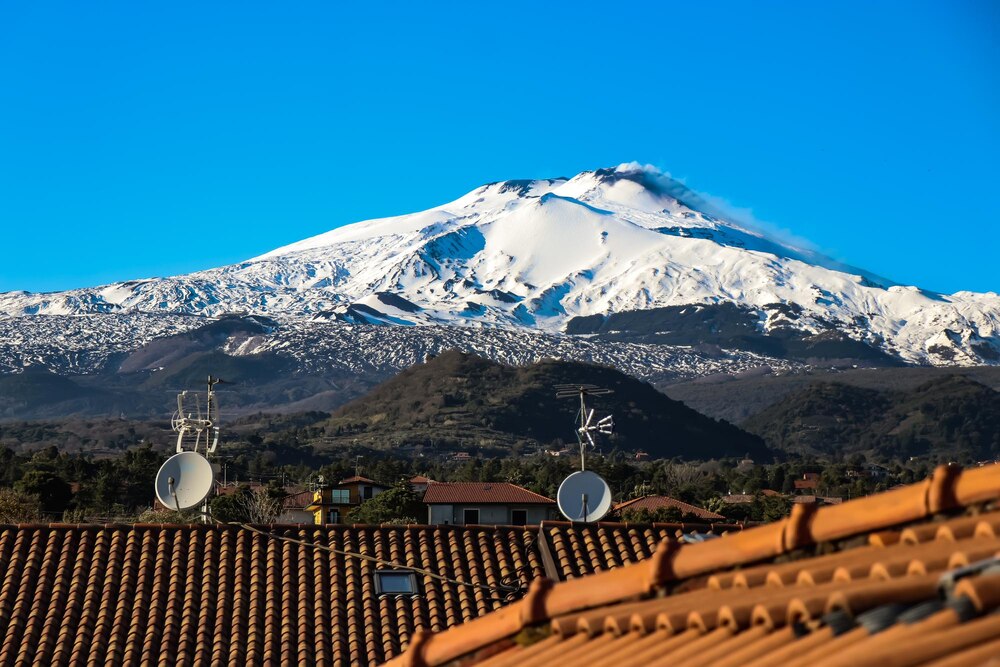
Etna has always been more than a physical volcano. For ancient Greeks, it was a backstage door into the world of gods and monsters. Over centuries, “Mongibello” absorbed these tales, mixing them with Christian and folk traditions into something uniquely Sicilian.
The Forge of Hephaestus and the Giant Under the Mountain
In Greek mythology, the inside of Etna was the forge of Hephaestus, god of fire and metallurgy, helped by the Cyclopes. The glow of eruptions and the constant rumbling fit perfectly with the idea of a divine workshop. This image stayed alive for a long time, updated and retold under the name Mongibello.
Rome added its own twist: the giant Enceladus (or sometimes Typhon) was said to be buried beneath Etna as punishment. His movements caused earthquakes, and the eruptions were his furious breath. For people living on the flanks of the volcano, these stories were not abstract theology; they were a way to explain terrifying natural events using familiar characters.
Medieval and early modern writers often used Mongibello instead of Etna when they wanted to stress drama, mystery, or hellish imagery. Poets and storytellers associated Mongibello with:
- Subterranean fires and gates to the underworld
- Smiths and craftsmen blessed or cursed by volcanic fire
- Saints and miracles protecting villages from lava
- Love and jealousy set against eruptions and ash falls
Sicilian oral tradition reinforced Mongibello as a character rather than just a place. The volcano “sleeps”, “wakes up”, “growls”. That anthropomorphic tone clings much more naturally to Mongibello than to the more neutral “Etna”.
Geography and Structure: What “Mongibello” Actually Refers To
From a geological perspective, the name Mongibello is sometimes used in a narrower, more technical sense. Etna is not a simple cone but a complex volcanic system built up over more than 500,000 years. Different cones, craters, and lava fields overlap each other like a messy stack of pancakes.
Mongibello as the Modern Summit Cone
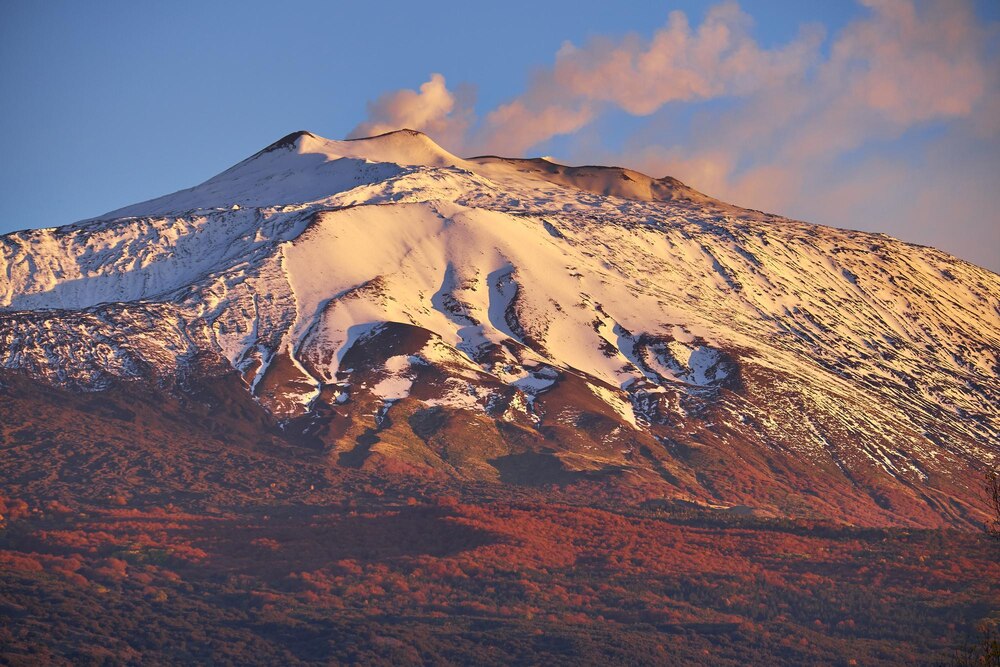
In volcanology, “Mongibello” can refer specifically to the younger, active cone at the top of Etna, formed over about the last 15,000 years. This is the part that currently erupts most frequently, with multiple summit craters such as:
- Bocca Nuova (opened in 1968)
- Voragine
- North-East Crater
- South-East Crater and New South-East Crater
This usage creates a subtle but useful distinction:
- Etna: the whole volcanic edifice, including older slopes, ancient craters, and the broad base extending toward Catania and the Ionian Sea.
- Mongibello: the high, central, active part of the volcano, where current eruptions concentrate.
Not every scientist or guide sticks strictly to this distinction, but it explains why technical papers sometimes mention “Mongibello” as if it were a specific cone within Etna. For visitors reading both tourist material and scientific summaries, this can be a source of confusion — it looks like two separate volcanoes, but in reality it is just one, with an internal naming nuance.
In everyday speech, locals rarely fuss about this level of precision. Still, knowing that “Mongibello” can mean “the active summit zone” helps make sense of some modern usage, especially in Italian and Sicilian scientific and hiking communities.
Life Around the Volcano: How the Two Names Show Up in Daily Use
The slopes of Etna/Mongibello are not empty. Around 900,000 people live in the broader area influenced by the volcano, including residents of Catania, Acireale, and dozens of smaller towns. The mountain shapes everything from agriculture to local vocabulary.
Vineyards, pistachio groves (especially around Bronte), citrus orchards, and chestnut woods all benefit from the volcanic soils of Etna’s flanks. Farmers often talk about the mountain in personal terms: it destroys with one eruption, then fertilizes for generations. Here, Mongibello is almost a moody neighbor.
In branding, “Etna” tends to label wines and products aimed at national and international markets: Etna DOC wines, Parco dell’Etna, etc. “Mongibello” often appears on smaller, more artisanal products, local shops, B&Bs, and in projects that want to underline a stronger Sicilian or dialect identity. There’s a quiet marketing logic behind the choice of name:
- Etna sounds clear and recognizable to visitors from outside Sicily.
- Mongibello signals “local, rooted, traditional” to people who know the area or appreciate regional culture.
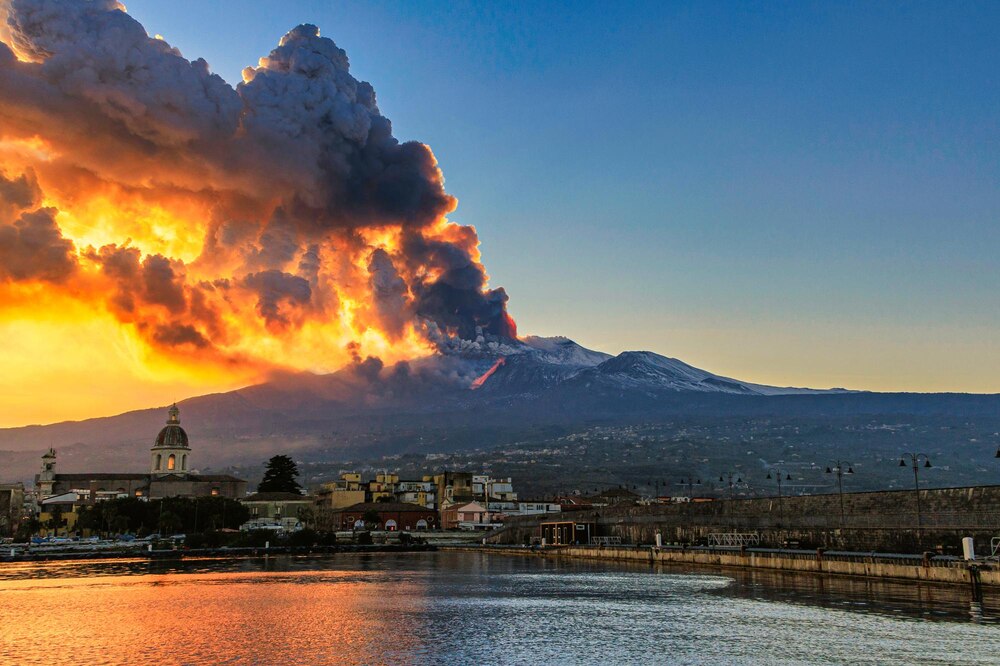
Both names also pop up in everyday expressions and weather talk. When ash starts falling, when the summit glows red at night, or when thunder-like booms echo across the coast, people might casually say “Mongibello is angry again” or “Etna is making a show tonight.” The choice of name often mirrors the speaker’s emotional distance or closeness to the volcano.
Visiting Etna/Mongibello: What to Expect
On the ground, travelers encounter both names constantly. Road signs point to “Etna Nord” and “Etna Sud”, while nearby cafés or agriturismi might call themselves something-Mongibello. Guides explaining eruptions may switch between the two depending on their mother tongue and the tone they want to set.
Practical Tips for First-Time Visitors
A few basics help make sense of the place and the terminology:
- Planning and research: Search for “Etna” when checking official information, park regulations, or scientific updates. “Mongibello” will bring up more local, cultural, and historical material.
- Guided excursions: On organized tours to the summit craters, expect guides to mention Mongibello in stories and myths, and Etna in geological explanations.
- Altitude and climate: The summit area reaches about 3,300 m (roughly 10,800 ft). Temperatures, wind, and conditions there are serious mountain weather, not just a scenic hill above the beach.
- Safety: Eruptions can start or intensify quickly. Official access is sometimes restricted. In those moments, the technical volcano bulletins will talk about “Etna”, while locals might comment on “Mongibello’s mood.” Both refer to the same activity.
Listening for the switch between names can actually be part of the experience. “Etna” tends to appear in announcements, printed materials, and official statements. “Mongibello” slips into anecdotes about grandparents, old eruptions, and specific lava flows that everyone in a town still remembers.
Why the Double Name Matters
At first glance, the Etna/Mongibello duality might seem like a simple case of “official name vs nickname”. In reality, it reveals quite a bit about Sicily itself: a crossroads of languages, overlapping civilizations, and a strong sense of place. Two names stacked on top of each other, both meaning “mountain”, echo the way cultures have layered themselves around the volcano.
For travelers, learning that Mongibello and Etna are the same volcano avoids a lot of confusion and opens the door to deeper stories, both scientific and cultural. For locals, using one name or the other is often instinctive, linked to how they relate to the mountain that dominates their horizon.
Next time a news report mentions Etna erupting while a Sicilian friend talks about Mongibello singing, there is no contradiction. It is the same giant, simply wearing two different names — one aimed at the world, one rooted in the island’s memory.