
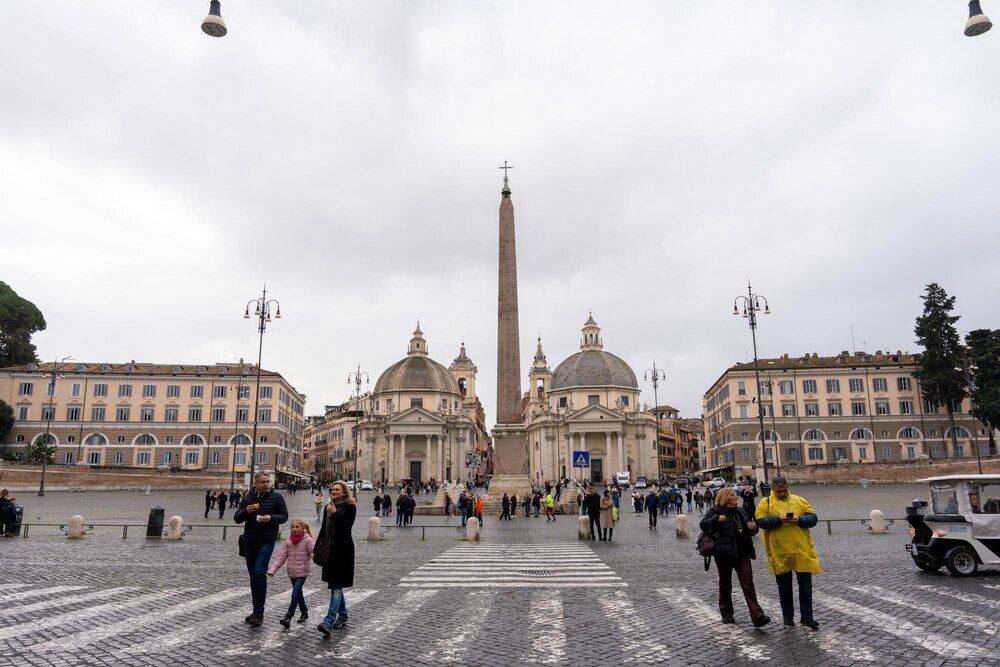
Planning a trip to Turin can feel tricky: the city is packed with sights, food, and museums, but it’s easy to miss the best parts and just skim the surface. The good news is that Turin is very manageable once the days are structured a bit. This guide focuses on concrete things to do in Turin, how to group them, and what’s actually worth your time if you have limited days in the city.
1. Start with the historic center
The historic center is compact and walkable, so it makes sense to anchor the first day here. Most of Turin’s “must-see” places are within a short walk of each other, which makes planning very straightforward.
Begin at Piazza Castello, the city’s main square. From here, you get a good feel for Turin in one glance: royal palaces, porticoed streets, and the Alps in the distance on clear days. The square is framed by:
- Palazzo Reale (Royal Palace)
- Palazzo Madama
- The entrance to Via Po, one of the main streets
Palazzo Reale is worth going inside if there is at least half a day. The royal apartments, armory, and the gardens give a surprisingly complete sense of the former Savoy court, and the complex also hosts the Royal Armoury and the Galleria Sabauda with paintings.
Palazzo Madama, right in the middle of the square, is more of a mixed bag: nice city views from the tower, and an interesting decorative arts museum, but it’s secondary if time is short. For a first visit, going inside one major palace (usually Palazzo Reale) is enough.
Turin was the first capital of unified Italy in the 19th century, which explains the city’s unusual mix of royal palaces, wide avenues, and Paris-like arcades – it was built to impress.
From Piazza Castello, walk down Via Roma towards Piazza San Carlo, often called Turin’s “salotto” (living room). The twin churches at the end of the square and the uniform facades under the arcades make it one of the most elegant places in the city. This is a good stop for a first coffee or hot chocolate.
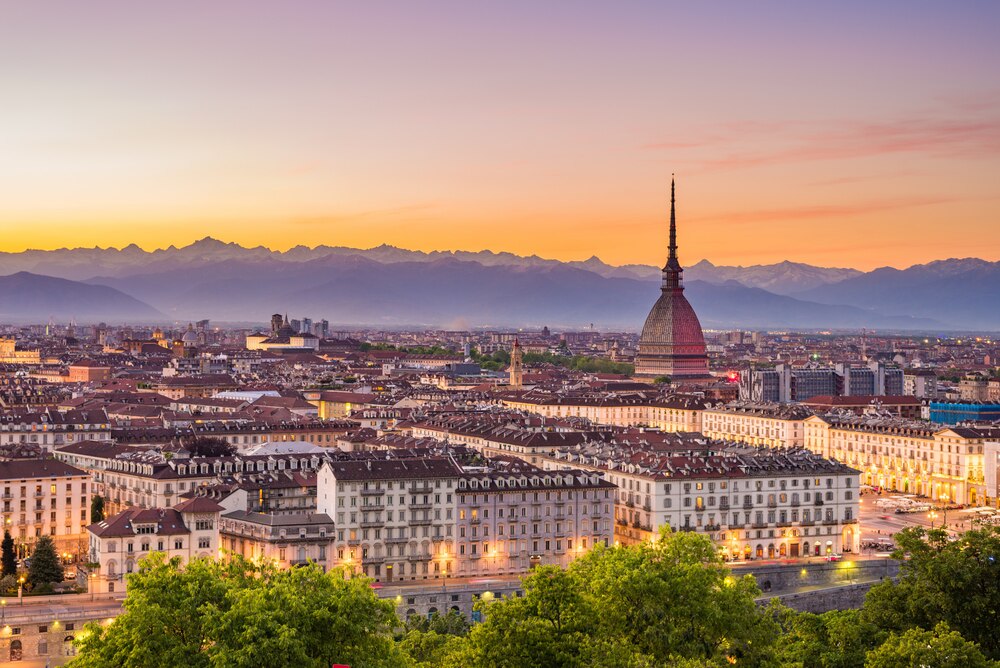
2. Mole Antonelliana & the Cinema Museum
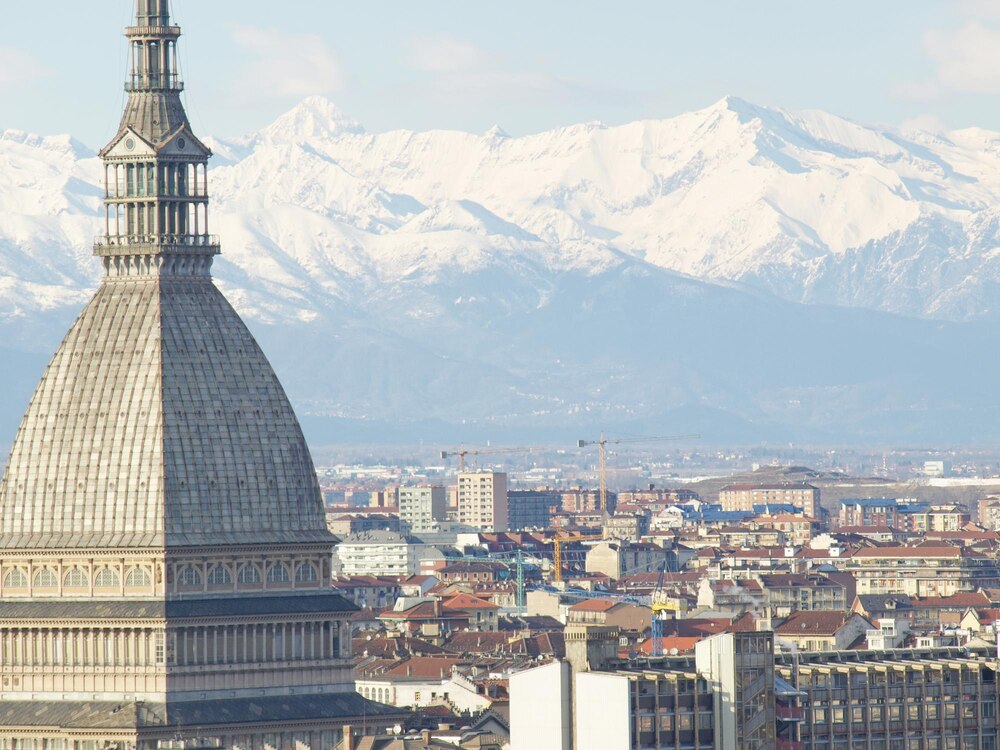
The Mole Antonelliana is Turin’s most recognizable building and dominates the skyline. It originally started as a synagogue and later became a symbol of the city. Inside, it hosts the National Cinema Museum – one of the most engaging museums in Turin, even for people who aren’t film obsessives.
The museum is built vertically around the huge central hall of the Mole. You move through the history of cinema with a lot of interactive corners, old equipment, and small viewing rooms. It’s playful rather than academic, which makes it good for mixed-age groups or anyone already overloaded with classic art museums in Italy.
There are two different experiences here:
- Museum visit – usually takes 1.5–2 hours at a relaxed pace
- Panoramic lift to the top – a glass elevator that runs through the middle of the building and takes you to a viewing platform
On clear days, the view from the top is excellent: rooftops, river, and the Alpine arc around the city. On days with haze, the experience can feel underwhelming, so it’s worth checking weather and visibility. Booking tickets online in advance is highly recommended, especially on weekends.
3. Egyptian Museum: Turin’s heavyweight attraction
The Egyptian Museum of Turin (Museo Egizio) is often the highlight of a visit. This is not an obscure local collection: it’s considered the second most important Egyptian museum in the world after Cairo, with over 40,000 artifacts (a smaller but carefully curated part is on display).
Expect to spend at least 2–3 hours here. The museum layout is modern and clear, and the audioguide (or official app) makes a big difference. The most impressive areas include:
- Well-preserved mummies and sarcophagi
- Reconstructed tombs and burial chambers
- The Gallery of the Kings with monumental statues
Even people who are usually “done” with museums by this point in an Italian trip tend to stay longer here than planned. For a short visit to Turin, this museum is worth planning a full morning or afternoon around.
4. Walk along the Po River and the Gran Madre area
Turin isn’t just palaces and museums; the riverfront shifts the mood completely. From Piazza Castello, follow Via Po all the way down to the Po River
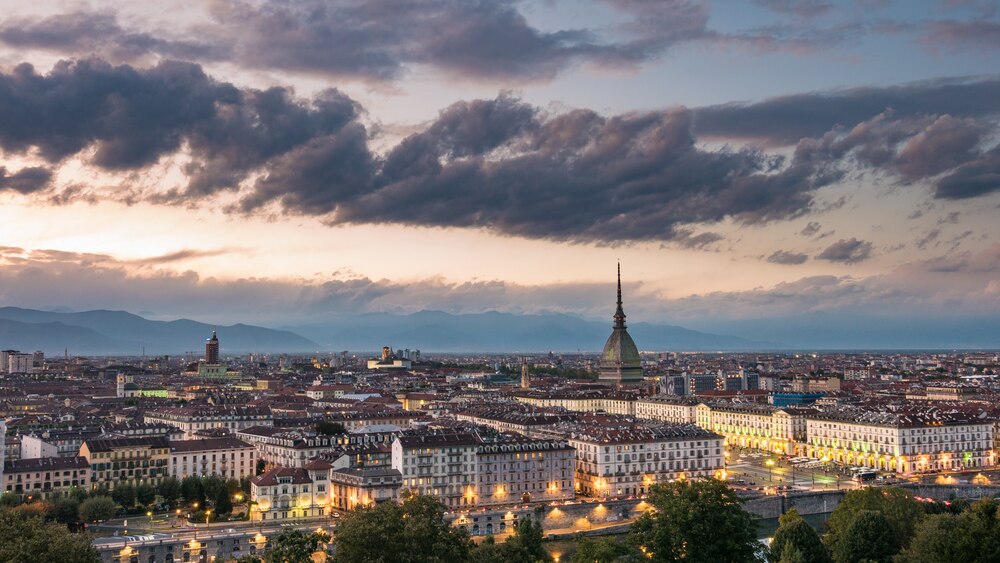
Cross the Vittorio Emanuele I bridge and head to the Gran Madre di Dio church, which looks slightly like a smaller Pantheon. The steps up to the church and the square around it are a good place to pause and look back at the cityscape: domes, the Mole Antonelliana, and the mountains behind. If there is energy for a short climb, continue up to the Monte dei Cappuccini (about 10–15 minutes from the Gran Madre, uphill). The terrace by the church at the top offers one of the best free panoramas over Turin, especially at sunset. Turin takes food seriously, and it’s not just about pasta and pizza. The city has its own pace and habits, and tasting those is part of the visit. Historic cafes are a big part of the local culture. Places like Caffè Torino (in Piazza San Carlo), Baratti & Milano (near Piazza Castello), or Caffè Mulassano have ornate interiors, old mirrors, and polished counters that haven’t changed much for decades. One specialty to try is bicerin, a layered drink of coffee, hot chocolate, and cream, served in a glass. The classic place for it is Al Bicerin near the Santuario della Consolata, but several cafes around the center prepare their own version. Turin is also the home of gianduja, the hazelnut chocolate mix that later inspired Nutella. Local brands like Guido Gobino or Guido Castagna offer high-quality gianduiotti (small ingot-shaped chocolates) and spreads worth bringing back. For a more everyday side of the city, head to the Porta Palazzo market, one of the largest open-air markets in Europe. It’s a bit chaotic, but that’s the point: fruit and vegetable stalls, cheese, meats, and separate indoor halls for fish and regional products. In the evening, Turin’s answer to “going for a drink” is aperitivo. Instead of a single bowl of chips, many bars serve small buffets or a series of snacks with drinks. Neighborhoods like Quadrilatero Romano (behind Piazza Castello) and San Salvario (near Porta Nuova station) are full of options ranging from casual to more polished. Some local dishes to look for: Pair these with local wines like Barbera, Nebbiolo, Barolo, or a simple glass of Dolcetto. Turin’s food scene is strong enough that even random neighborhood trattorie often deliver good quality, especially at lunch. When the historic center feels too dense, Turin has enough green space and villas to slow things down without leaving the city. Parco del Valentino runs along the Po River and is the classic urban park for a stroll or bike ride. Inside the park stands the Castello del Valentino (today an architecture faculty) and a reconstructed medieval village, the Borgo Medievale. The Borgo is a 19th-century fantasy version of a medieval town, not an original structure, but it’s a pleasant walk and often quiet on weekdays. For something more royal, move out slightly to the Reggia di Venaria Reale, a short train or bus ride from the center. This former Savoy residence is huge, with restored palace rooms and extensive gardens. On clear days, the long alleys frame the mountains in the distance. Venaria can easily take half a day or more, so it’s best on trips of at least three days in Turin.
Turin and its surroundings include a network of Savoy residences (palaces, hunting lodges, villas) recognized as a UNESCO World Heritage site – Venaria Reale is the most famous, but not the only one. If the main attractions are already done or there is a specific interest, Turin has several specialized museums that are worth planning around. The city has strong ties to industry, especially cars. The Museo Nazionale dell’Automobile (National Automobile Museum) is one of the better car museums in Europe, even for non-fanatics. The collection moves from early experiments to modern models, with a good amount of design history and cultural context. Another angle on Turin’s industrial past is the Lingotto area, the former Fiat factory turned multi-purpose complex. The building is famous for its rooftop test track, which can still be visited as part of some tours or events. Nearby, the restored Officine Grandi Riparazioni (OGR) hosts exhibitions and cultural events in a vast former railway workshop. For something completely different, the Museo Nazionale del Risorgimento Italiano covers the period of Italian unification. This is a more classic history museum, ideal for those interested in 19th-century politics and the birth of modern Italy. All of this can feel like a lot on paper, so here is a simple way to group activities: If there is 1 full day: If there are 2 full days: If there are 3 days or more: Turin rewards a slightly slower rhythm. The main sights are impressive, but what usually sticks is the combination of grand squares, under-the-arcade walks, strong coffee, and that constant backdrop of the Alps. With a bit of structure, even a short stay covers a lot without turning into a rush.5. Turin for food lovers: chocolate, coffee, aperitivo
Cafés, chocolate, and bicerin
Markets, aperitivo, and traditional dishes
6. Parks, royal residences, and slower corners
7. Museum choices beyond the classics
Automobile, industry, and urban Turin
8. How to structure 1–3 days in Turin